Planning a Kenya safari is exciting, but for Korean speakers the research often splits into two frustrating paths. English guides assume you live in London or New York. Korean blog posts are short on real detail. This is TouringInsights’ Kenya safari planning for Korean speakers, built with the depth of a destination guide and the honest logistics you actually need.
What Does TouringInsights’ Kenya Safari Planning for Korean Speakers Cover?
This guide walks through where to go, when to go, how many days to budget, and what things cost. It also covers visas, flights, and the honest reality of finding a Korean-speaking guide, so you can plan with confidence instead of piecing together scattered forum posts.
Where Should You Go on Your First Kenya Safari?
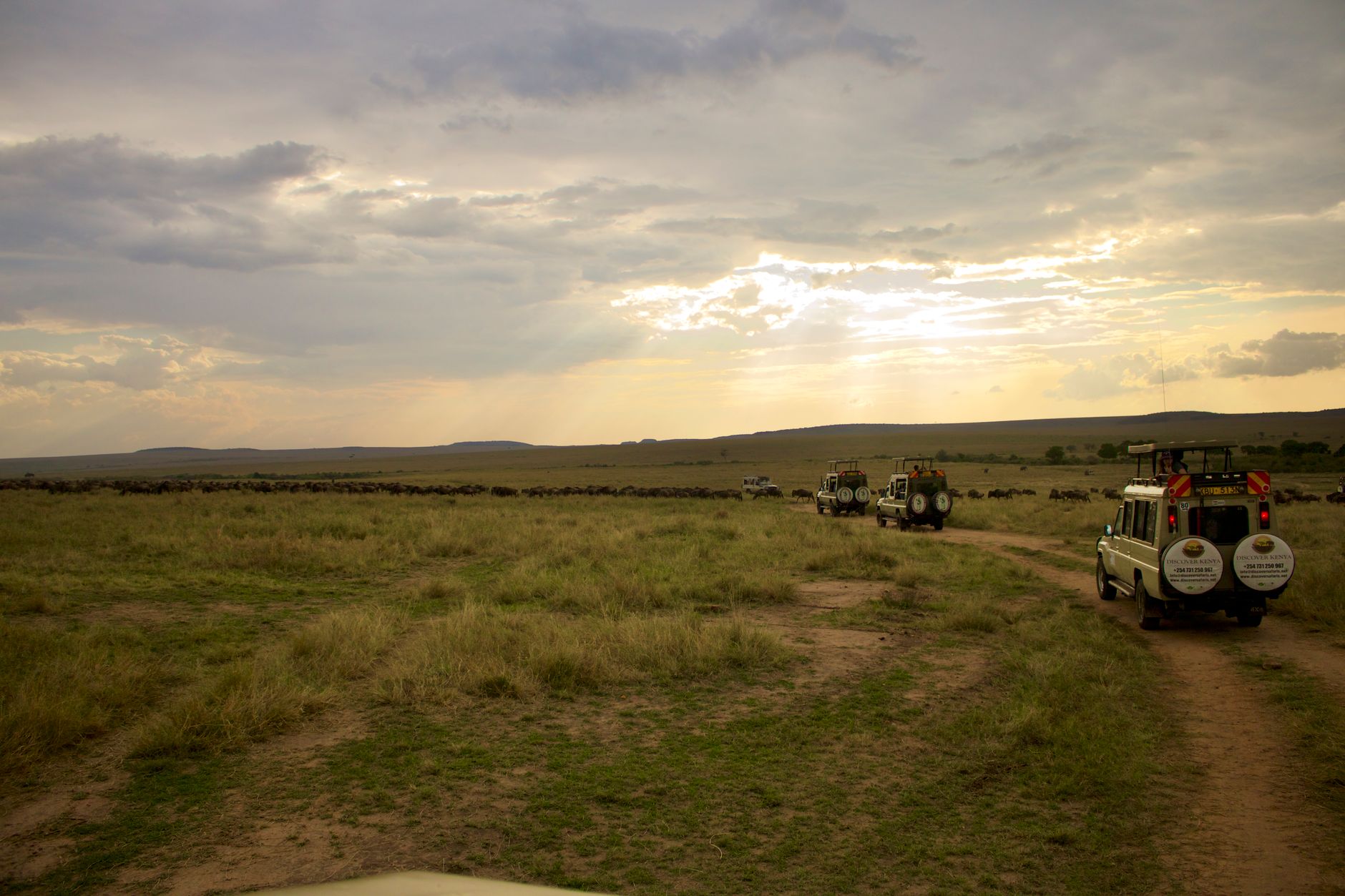
Most first-timers start with the Masai Mara, famous for one of the highest concentrations of large predators in Kenya. Multi-day visits give you a good chance of spotting lions, cheetahs, and leopards, though sightings are never guaranteed. The wildebeest migration passes through from July to October.
Do not ignore Amboseli, at the foot of Mount Kilimanjaro. Expect large elephant herds and often close sightings, depending on the animals and your guide’s judgment.
For a different landscape, consider Samburu. It is drier and more remote, home to species found nowhere else in Kenya, including the reticulated giraffe, Grevy’s zebra, and the beisa oryx. If you have time, add Lake Nakuru too, which attracts flamingos and rhinos and works well as a stop between Nairobi and the Mara.
For a detailed comparison of the two most popular parks, read our guide on Masai Mara vs Amboseli.
What Is the Best Time of Year for a Kenya Safari?
Kenya has two dry seasons and two wet seasons, and the dry seasons are generally best for wildlife viewing.
The long dry season, late June to October, brings short grass and scarce water, so animals gather around remaining waterholes, including during the wildebeest migration. Expect clear skies and warm days, but also higher prices and crowds. The short dry season, January to February, is a hidden gem: dry weather, low vegetation, no summer crowds, and predator sightings that stay strong.
The long rains, March to May, close many camps and turn roads muddy, and wildlife disperses because water is everywhere. Avoid these months unless you get a steep discount. The short rains, November and December, bring a lush, green landscape and large numbers of migratory birds, good for photographers though animals hide in the tall grass.
To dig deeper into the trade-offs by month, see our best time to visit the Masai Mara guide.
How Many Days Do You Need for a Kenya Safari?
A week is the minimum for a meaningful trip. Five days works, but you will lose almost a full day just traveling to the park and back.
We recommend 8 to 10 days on safari alone. A typical structure:
- Day 1: Arrive in Nairobi, rest overnight
- Days 2 to 4: Fly or drive to the Masai Mara, three full game drives
- Days 5 to 6: Fly or drive to a second park, such as Amboseli or Lake Nakuru
- Day 7: Final morning game drive, return to Nairobi
- Days 8 to 9: Buffer for flights, jet lag, or a visit to a wildlife sanctuary
This pace covers two different ecosystems and leaves a buffer if weather or animal movement spoils a day.
How Much Does a Kenya Safari Cost per Person?
Safari costs vary enormously, driven mainly by accommodation quality, park choice, and whether you fly or drive between parks.
Fee-setting is not uniform. The Kenya Wildlife Service sets non-resident entry fees for parks such as Amboseli and Lake Nakuru. The Masai Mara National Reserve sits outside that system, managed instead by the Narok County Government, whose rate commonly runs higher than typical KWS fees. Confirm current numbers with your operator. Conservancies add a further daily fee, typically USD 100 to 150 per person.
The table below shows indicative accommodation ranges per person per night, based on standard published mid-2026 rates. Prices vary by season and camp, and rarely include park fees, drinks, or tips.
| Accommodation Tier | Per Person Per Night (USD, indicative) | What You Get |
|---|---|---|
| Budget camp | 150 to 250 | Basic tent, shared facilities, simple meals |
| Mid-range lodge | 350 to 600 | Private room, en-suite bathroom, pool or bar |
| Luxury tented camp | 600 to 1,200 | Spacious tent, deck, gourmet food, private guide |
| High-end conservancy camp | 1,200 to 2,500 | Exclusive vehicle, off-road driving, bush walks |
A realistic budget for a 7-day safari is USD 2,500 to 4,000 per person for a mid-range experience, including park fees and transfers but excluding flights.
For a fuller breakdown, read our guide on Kenya safari cost.
Is the Masai Mara or Amboseli Better for a First Safari?
Choose the Masai Mara for the classic African savanna experience: lions, leopards, cheetahs, and vast herds of zebra and wildebeest across open grassland. Visit between July and October, and you may witness river crossings during the migration.
Choose Amboseli for elephants and mountain views. The park is known for its large tusker elephants, with Kilimanjaro as a dramatic backdrop, especially at sunrise. Its smaller size means you can see a lot in two days.
Many travelers do both, flying from Nairobi to the Mara for four nights, then on to Amboseli for two.
For a direct head-to-head, use our Masai Mara vs Amboseli comparison.
What Is the Difference Between a Conservancy and a National Park?
National parks are public land with strict rules: you must stay on designated roads, and night drives are banned. In the Masai Mara National Reserve, vehicles can crowd around a lion sighting.
Conservancies are private or community-owned land next to the parks, with more flexible rules. Off-road driving and night drives are often permitted. Vehicle limits per sighting run lower, sometimes capped at three or four cars, for a more private experience at a higher price. Named conservancies in the Mara region include Mara North, Naboisho, and Olare Motorogi.
We cover this in depth in our complete guide to the Masai Mara.
How Do Korean Travelers Get a Visa for Kenya?
Kenya uses a straightforward electronic visa system. Go to the official eCitizen portal, create an account, and fill out the form. You will need a passport valid for at least six months, a digital passport photo, and proof of yellow fever vaccination.
The single-entry tourist visa costs about USD 50, is valid for 90 days, and usually processes in 3 to 7 days. Apply at least two weeks ahead, and skip third-party agents, since the official portal is all you need.
As of August 2026, the East Africa Tourist Visa is unavailable, so apply for a Kenya single-entry visa instead.
Are There Direct Flights from Korea to Kenya?
No. There are no direct flights from Incheon to Nairobi as of mid-2026, so you need one connection. The most common routing is via the Middle East: Qatar Airways via Doha, Emirates via Dubai, or Turkish Airlines via Istanbul. Ethiopian Airlines flies via Addis Ababa, a shorter hop geographically.
Total flight time from Seoul to Nairobi runs 16 to 20 hours including the layover, so book a connection with at least two hours to spare.
Nairobi’s main airport is Jomo Kenyatta International, JKIA. Domestic flights to safari airstrips depart from Wilson Airport, about 20 minutes by road, so budget time for the transfer.
Is It Hard to Find Korean-Speaking Guides on a Kenya Safari?
Honest answer: yes, often.
Kenya has a small number of licensed safari guides who speak Korean fluently. Most guides speak English or Swahili, and Korean-speaking staff remain rare even at multilingual camps.
If you book a private safari, request a Korean-speaking guide in advance, since reputable operators will confirm availability, though it may cost extra. On a shared group safari, English is the default, so you need a baseline of English for game drives and safety briefings. If your English is limited, a private vehicle with a Korean-speaking guide costs more but removes daily friction.
Do not assume a Korean-language operator website means Korean-speaking staff on the ground. Some Seoul agencies outsource to Kenyan partners who run the safari in English.
What Should You Pack for a Kenya Safari?
Packing for Kenya is about layers and comfort, since the weather varies from cool mornings to hot afternoons.
Neutral-colored clothing works best, since bright colors and white stand out to animals. Long sleeves and pants protect against sun and insects, and a light fleece helps on cold dawn drives. Pack closed-toe shoes for game drives and comfortable walking shoes for bush walks.
Other essentials:
- Sunscreen, lip balm, and insect repellent with DEET
- A headlamp, a power adapter for Kenya’s Type G plugs, and binoculars, 8x or 10x magnification
- A dust-proof camera bag and a refillable water bottle
- Personal medications and a small first-aid kit
Biodegradable toiletries suit camps that manage their own wastewater.
For a full checklist, see our Kenya safari packing list.
Is Kenya Safe for Korean or Solo Travelers?
Kenya is generally safe for travelers who follow standard precautions. The safari parks and conservancies are secure, well-regulated environments, and crime is rare inside them.
The main safety concern is in Nairobi. Avoid walking alone after dark, use registered taxis or app-based rides, and do not flash valuables, the same precautions as any large city.
For solo travelers, a private safari is easy to arrange, with a driver-guide at your side throughout. The main extra cost is single occupancy, which some camps waive in low season.
Yellow fever vaccination is required for entry from most countries. Malaria is present in the safari regions, so talk to your doctor about antimalarial medication and use repellent at dawn and dusk.
Should You Tip on a Kenya Safari?
Tipping is expected in Kenya’s safari industry, and it is how guides and camp staff supplement their wages.
A common guideline is USD 10 to 15 per day per guest for your driver-guide. Camp staff, such as waiters and room attendants, typically share USD 5 to 10 per day. Some camps use a communal tip box, while others suggest tipping individually.
Cash in US dollars is easiest. Bring small denominations, avoid coins, and ask your operator for their specific policy, since standards vary between budget and luxury camps.
How Should You Compare Safari Operators as a Korean Speaker?
Many first-timers book with the first operator that looks good online, which is a mistake.
As a Korean speaker, you have a few options. Book with a Korean-speaking Kenyan operator who runs safaris directly, a Korean agency in Seoul that partners with a local ground handler, or an international operator with a requested Korean guide. The first gives consistent communication but fewer camps. The second offers Korean-language support but may add a markup. The third gives the widest selection but requires you to verify the guide yourself.
When comparing, ask these questions:
- Is the Korean-speaking guide confirmed for my dates?
- Are park fees and conservancy fees included in the quote?
- What is the vehicle type, and how many passengers share it?
- What is the cancellation policy?
Get answers in writing, and avoid operators who say “we will try” or “usually possible.”
Where Should You Book Your Kenya Safari?
TouringInsights is an editorial guide. We do not sell safaris or take bookings, only honest, practical information so you can plan with confidence.
Once you have compared itineraries, compare safari operators and browse packages across multiple platforms. Three worth including for transparent pricing and clear logistics are:
- FindMySafari for comparing vetted operators side by side
- Valley Safaris for tailored private safaris and conservancy stays
- Trunktrails Safaris for mid-range and budget options with clear inclusions
Where Can You Find More Safari Planning Resources?
- Kenya wildlife tours from Trunktrails Safaris
- Interactive Maasai Mara map from Valley Safaris
- Masai Mara destination guide on FindMySafari
Browse these packages, compare quotes, and confirm your Korean-speaking guide before you pay.
More safari planning resources
- Kenya wildlife tours from Trunktrails Safaris
- Interactive Maasai Mara map from Valley Safaris
- Masai Mara destination guide on FindMySafari
- Masai Mara Great Migration guide from Trunktrails Safaris
Related guides: Kenya Safari for Korean Travelers: A Practical Planning Guide.